
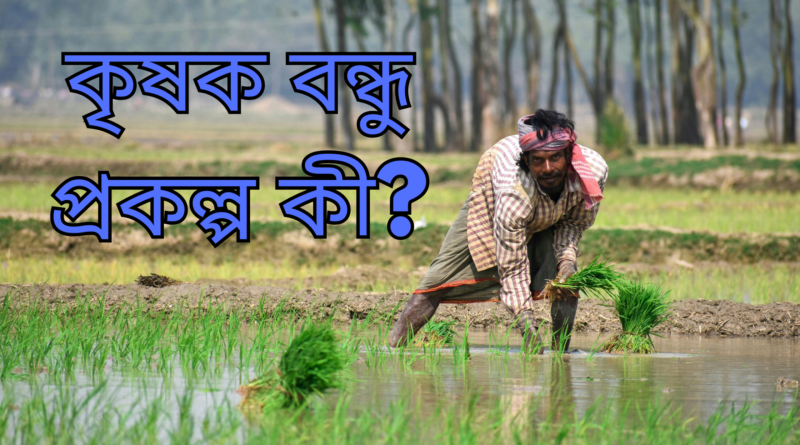
West Bengal Krishak Bandhu Scheme: A Comprehensive Support System for Farmers
The Krishak Bandhu Scheme, launched in 2019 by the Department of Agriculture, Government of West Bengal, is a flagship initiative. It is aimed at ensuring financial security and sustainability for the state’s farming community. In addition, with a dual focus on direct income support and risk mitigation, this scheme stands as a significant pillar of welfare. Therefore, it provides vital social security for West Bengal’s small and marginal farmers.
Key Objectives of the Krishak Bandhu Scheme
This initiative actively supports the agricultural community through the following goals:
- Distribute direct financial assistance to farmers for seasonal agricultural activities.
- Assist vulnerable families with substantial grants during sudden emergencies.
- Enhance long-term agricultural stability and overall risk coverage across West Bengal.
Direct Income Support: Enhancing Agricultural Sustainability
Under the scheme, eligible farmers receive ₹5,000/- per acre per year, which is capped at 2 acres. Furthermore, this support is disbursed in two equal installments. Specifically, you will receive one payment each for the Kharif and Rabi crop seasons.
Eligibility for Income Support
- Must be a resident of West Bengal.
- Must own up to 2 acres of cultivable land.
- Must be actively engaged in farming.
Income Support Breakdown
- Farmers with 1 acre or more: ₹10,000 per annum (₹5,000 per season).
- Farmers with less than 1 acre: Support is provided on a pro-rata basis, with a minimum of ₹4,000 per year.
In addition to income support, the scheme also provides a vital safety net for families. Specifically, it offers a one-time financial grant of ₹2,00,000/- in case of the death or permanent disability of a registered farmer. Therefore, this crucial initiative offers important financial relief to the legal heirs during times of sudden distress.
Eligibility for Death/Disability Benefits
- The farmer must be aged between 18–60 years.
- The applicant must be the legal heir (for death benefit).
- The farmer must maintain active enrollment under the scheme at the time of the incident.
Benefit Details
- Death: ₹2,00,000/- lump sum to the legal heir.
- Permanent Disability: ₹2,00,000/- lump sum to the affected farmer.
- Requires submission of death or disability certificates and legal heir documentation.
Application Process: Easy and Accessible
Applicants can apply online or offline for the scheme.
Offline Process
- Visit the nearest Gram Panchayat or Assistant Director of Agriculture office.
- Fill the prescribed application form.
- Attach required documents and submit the form.
- Collect a submission receipt or acknowledgement.
Online Application
- Apply through the official portal: https://krishakbandhu.wb.gov.in/users/sign_up
Required Documents
Additionally, if you are applying for Income Support, you must submit the following documents:
- Record of Rights (RoR) / Land Ownership Document / Patta.
- Voter ID (mandatory), Aadhaar (optional).
- Bank passbook (first and last page) or cancelled cheque.
- Passport-sized photo.
- Self-declaration and land-related documents.
Meanwhile, for the Death or Disability Benefit, applicants need to provide these specific certificates:
- Death certificate.
- Legal heir certificate.
- Disability certificate (for disability benefit).
- Aadhaar and land documents of the farmer.
Disbursement Details
Regarding the payout process, the department releases all financial benefits directly through Direct Benefit Transfer (DBT). However, you must fulfill certain conditions first. Specifically, the system links your income support to verified land ownership records, while the death and disability benefits strictly require valid legal documentation.
Helpline and Support
- Helpline Numbers: 8336957370, 6291720406 (available from 10 AM to 6 PM)
- Email: [email protected]
- Status Tracking: Application status can be checked at https://krishakbandhu.wb.gov.in
Conclusion
Overall, the Krishak Bandhu Scheme is a commendable effort by the West Bengal Government to empower the state’s farming community. By combining income support with social security measures, the scheme successfully ensures economic stability for farmers. Consequently, it builds a robust safety net for their families. Ultimately, with both online and offline accessibility, the scheme serves as a model for inclusive and farmer-friendly governance.